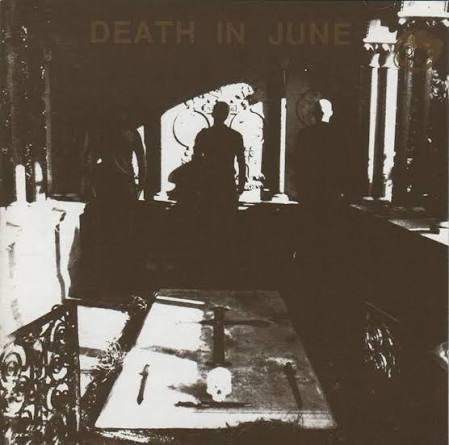
Nada! (1985) represents a fundamental watershed in the evolution of Death in June and, by extension, the broader post-industrial genre. The second studio album by the Douglas Pearce-led project marks the definitive departure from the post-punk roots of their early days (tied to his previous band, Crisis) to codify a hybrid aesthetic where electronic darkness meets the first, decisive acoustic intuitions. From a strictly musical standpoint, Nada! is an intrinsically dualistic record, split between synthetic tensions and folk openings: • Dark Synthpop and Electronics: Tracks like The Calling and Crush My Love rely on minimalist drum machines and icy synthesizer lines, deeply rooted in the Northern European darkwave of the era, yet executed with a martial and oppressive sensibility. • The Emergence of Neofolk: Track selections such as Behind the Rose (Fields of Rape) and She Said Destroy introduce the arpeggiated acoustic guitar as the compositional centerpiece. These tracks laid the formal foundations for what would later be defined as apocalyptic folk. The album explores a lyrical imagery dense with nihilism, cultural decay, historical warfare references, and reflections on the inevitability of death. The title itself (Nada!, nothingness) synthesizes Pearce's conceptual framework. The lyricism rejects linear narrative, instead utilizing symbolic and evocative imagery that deliberately plays with ambiguity and aesthetic provocation. While Nada! is unanimously considered a classic, a detached analysis reveals its nature as a transitional work. This album uniquely captures the band's moment of peak stylistic balance. The fluid transition between synthetic rigor and acoustic fragility grants the record a dynamic variety that later works—focused almost exclusively on neofolk—would partially lose. Precisely because of its transitional nature, the tracklist can feel stylistically fragmented to a contemporary listener. Certain mid-1980s synthesizer choices inevitably show their age, stripping the middle section of the record of some of its original abrasive edge.
L'IA sta riascoltando l'album per te...