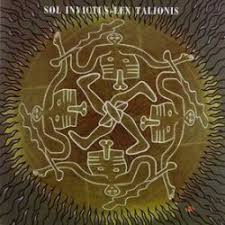
Lex Talionis (originally conceived in 1989 as part of a collaborative box set and released as a standalone album in 1993) is a pivotal work for understanding the transition of British post-industrial music toward the acoustic frameworks of neofolk. The project led by Tony Wakeford (formerly a founding member of Death in June and Above the Ruins) partially pivots away from the abrasive electronic textures of his earliest outputs to embrace a more traditional, somber, and elegiac song format. From a compositional standpoint, the album unfolds around a minimalist yet highly evocative aesthetic that laid the very foundations of the apocalyptic folk genre: • Acoustic Predominance: Acoustic guitars drive the majority of the tracks through cyclical, melancholic arpeggios, supported by a targeted use of piano and atmospheric synthesizers. • Declamatory Vocals: Wakeford’s voice, stripped of any virtuosity, adopts a dry, baritone, and almost detached register, which heightens the sense of urgency and pessimism within the lyrics. • Circular Structures: Emblematic tracks like Kneel to the Cross and the title track rely on repetitive harmonic progressions, giving the record a ritualistic and solemn cadence. The album's title itself invokes the law of retaliation (the "Law of Talion"), introducing a raw, nihilistic examination of history, modernity, and the decline of Western civilization. The lyrics blend European paganism, radical anti-Christianity, and a profound political disillusionment. The work rejects pop sentimentalism in favor of a worldview where ancient traditions clash with contemporary materialism (as vividly articulated in Blood Against Gold). Lex Talionis stands as a formal watershed, yet it is not without its critical shortcomings. • Strengths: It is a seminal album containing some of the absolute classics of the neofolk canon (most notably the aforementioned Kneel to the Cross). Wakeford's ability to craft memorable, evocative melodies with very few acoustic elements defines the record's efficacy. • Intrinsic Limitations: The production of the era suffers from technical constraints, leaving the keyboard sounds feeling occasionally dated and lacking in dynamics. The stark stylistic uniformity of the tracks, while consistent with the album's concept, can induce a sense of structural monotony during the latter half of the listening experience.
L'IA sta riascoltando l'album per te...